
Niacinamide vs Vitamin C — Which One Does Your Skin Actually Need?
The niacinamide vs vitamin C question comes up constantly in skincare and the debate is usually framed as a choice between them. It is the wrong framing entirely. These two ingredients address different skin concerns through completely different mechanisms, and for most people the real question is not which one to use but how to use both correctly without one undermining the other. Understanding what each actually does and what the old myth about using them together was based on gives you a routine that works harder than either ingredient alone.
The niacinamide versus vitamin C debate was settled by formulation chemistry years ago. The answer is that they are not competitors. They are a stack.
What Niacinamide Does
Niacinamide is vitamin B3 in its active form. It is one of the most consistently well-evidenced ingredients in skincare not because it does one thing exceptionally well, but because it does several things well simultaneously without irritating the skin in the process. This combination of multi-benefit performance and universal tolerability is exactly why it became a foundational ingredient in K-beauty formulations long before the rest of the global market caught up.
Here is what niacinamide actually does in the skin:
- Regulates sebum production: reduces the volume of oil produced by sebaceous glands directly relevant for oily, combination, and acne-prone skin types.
- Strengthens the skin barrier: stimulates ceramide synthesis the lipid that holds the barrier’s structural matrix together. This makes niacinamide one of the few brightening actives that simultaneously improves barrier function.
- Evens skin tone: inhibits the transfer of melanin from melanocytes to keratinocytes reducing the appearance of post-inflammatory pigmentation and uneven tone over consistent use.
- Reduces the appearance of pores: by regulating sebum and strengthening the surrounding skin structure, niacinamide makes pores appear smaller over time.
- Anti-inflammatory: reduces inflammatory signalling , beneficial for redness, sensitivity, and acne-prone skin types where inflammation drives most visible symptoms.
Concentration Guide: Niacinamide at 2% to 5% delivers barrier and anti-inflammatory benefits. At 5% to 10% it actively regulates sebum and addresses pigmentation. Above 10%, some skin types experience flushing a temporary redness caused by niacin flush, not damage. Most effective K-beauty formulations sit between 5% and 10%.
What Vitamin C Does
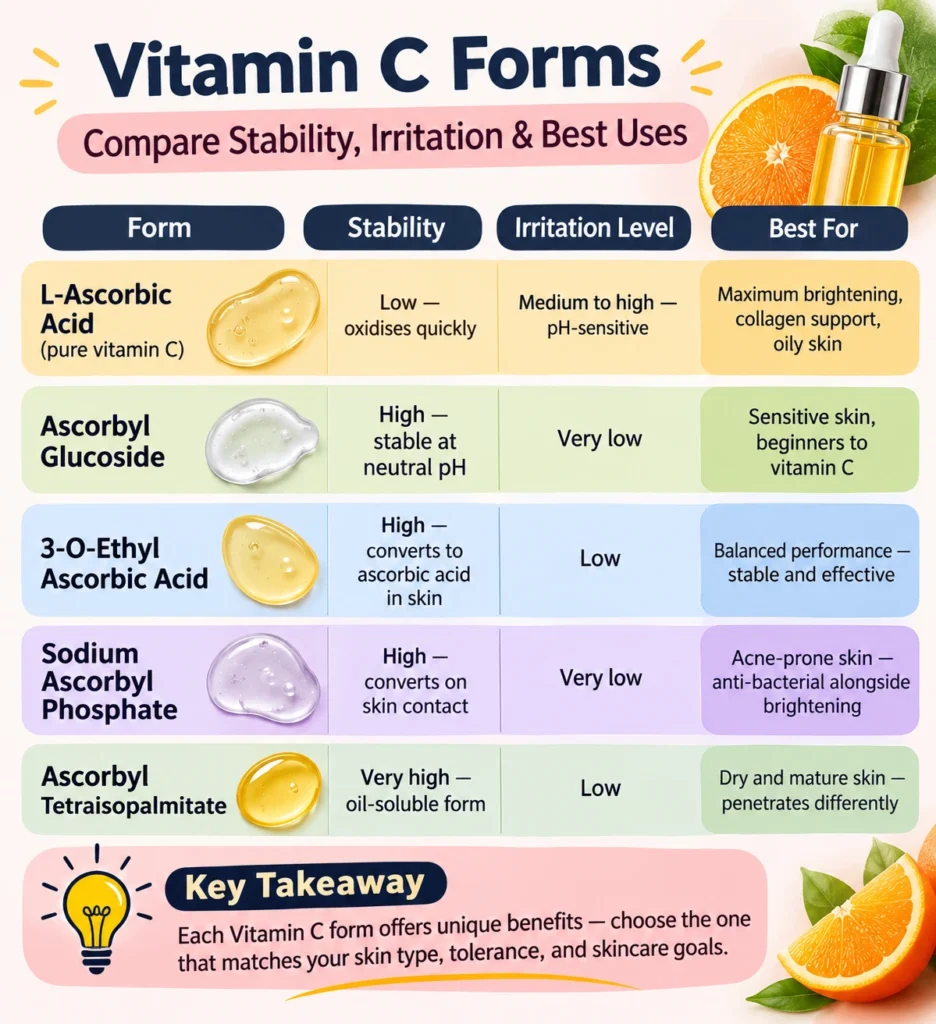
Vitamin C (ascorbic acid) is the most potent antioxidant available in mainstream skincare but it is also the most unstable, the most formulation-dependent, and the most likely to cause irritation when used incorrectly. Understanding vitamin C means understanding that the name covers a family of related compounds that behave very differently from each other.
The core benefits of vitamin C in skincare are: antioxidant protection against UV-generated free radicals (works alongside SPF, not instead of it), inhibition of tyrosinase the enzyme that triggers melanin production which produces a brightening effect on existing pigmentation, and support for collagen synthesis by stabilising the proline and lysine residues that form collagen’s structural backbone. These three functions make it one of the most valuable morning actives available provided the formulation is stable and the concentration is appropriate for the skin type using it.
Niacinamide vs Vitamin C
For years, skincare advice warned against using niacinamide and vitamin C together. The concern was that combining them would produce nicotinic acid a compound that causes the skin flushing niacin is known for in supplement form. This was not entirely fabricated the reaction can occur. But the conditions required to produce a meaningful amount of nicotinic acid in a skincare context are so specific and so far removed from how these products are actually used that the concern is functionally irrelevant.
The reaction requires: prolonged exposure at elevated temperatures, high concentrations of both compounds, and a specific pH window. In practice, layering a niacinamide serum and a vitamin C serum on skin at room temperature produces negligible nicotinic acid far below any concentration that would cause a visible reaction. The temporary flushing some people experience when combining these ingredients is almost always attributable to the low pH of the vitamin C formulation irritating skin that has not been introduced to acids gradually not a chemical reaction between the two actives.
The Current Consensus: Niacinamide and vitamin C are safe to use in the same routine. The interaction concern is not supported by evidence under normal skincare use conditions. The practical question is not whether to combine them but in what order and at what time of day.
Which One Does Your Skin Type Need More
For a straightforward entry point into both ingredients, the Medicube Zero Pore Pad deliver niacinamide alongside exfoliating acids in a single step making them particularly effective for oily and combination skin types who want the sebum-regulating and pore-minimising benefits of niacinamide without adding another serum to an already layered routine. The niacinamide content addresses tone and barrier alongside the AHA/BHA exfoliation in a format that takes seconds rather than minutes.
For vitamin C specifically, the Medicube Deep Vita C Daily Quick Sheet Masks which carry the brand’s triple vitamin C complex offer an accessible entry point for beginners who want vitamin C’s brightening benefits without the formulation instability and pH sensitivity of a pure L-ascorbic acid serum. The sheet mask delivery format provides controlled exposure at a consistent concentration, making it well-suited for skin that has not previously used vitamin C actively.
Use Both — But Use Them Correctly
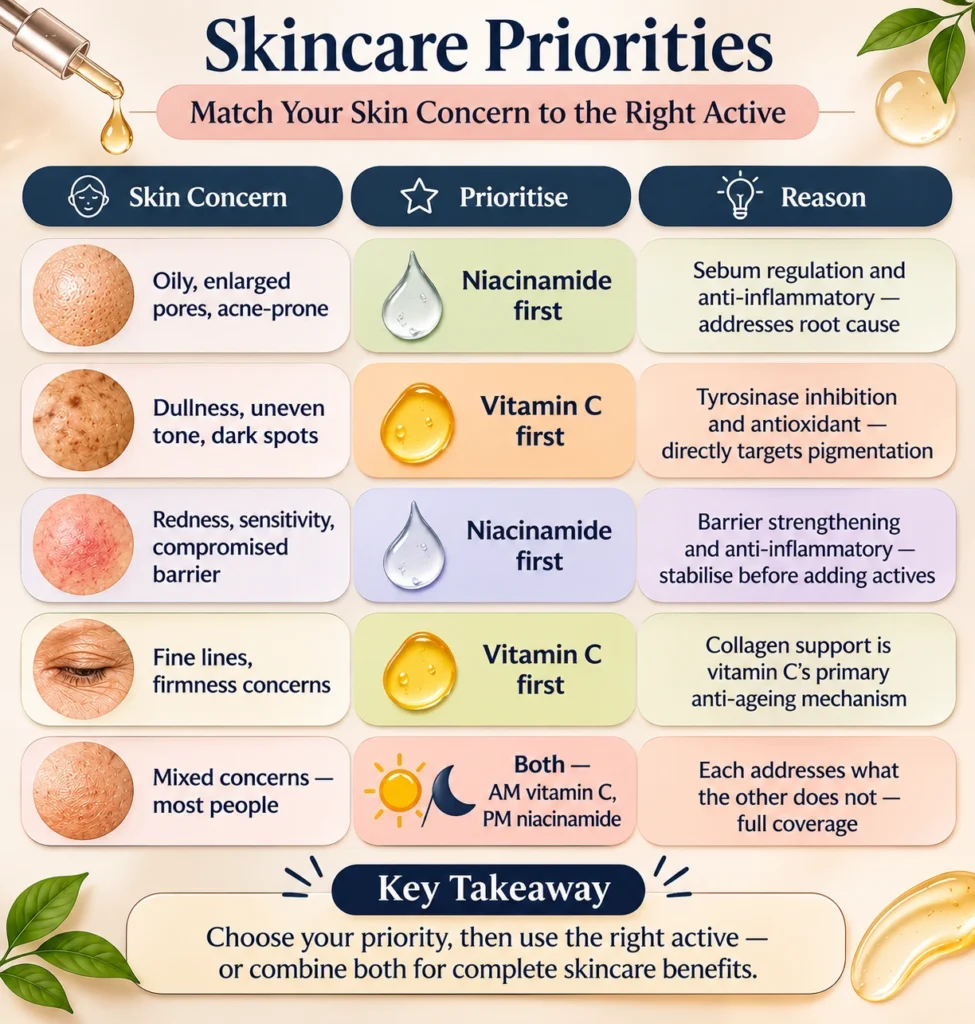
The niacinamide vs vitamin C debate is not a real choice for most skin types. It is a sequencing and formulation question. Niacinamide supports the barrier, regulates oil, and evens tone through one pathway. Vitamin C brightens, protects, and supports collagen through a completely different one. Used together in the right order, at the right time of day, with the right forms for your skin’s sensitivity level , they deliver results that neither can produce alone.
Start with whichever addresses your most pressing concern. Add the second within four to six weeks once the first is established in your routine. Give both twelve weeks of consistent use before evaluating results. That is not a long time for the kind of structural skin improvement both ingredients produce and it is a shorter wait than most people spend debating which one to choose.
Niacinamide and vitamin C are not competing for the same job. They are covering different shifts in the same routine and your skin benefits from both of them showing up.