
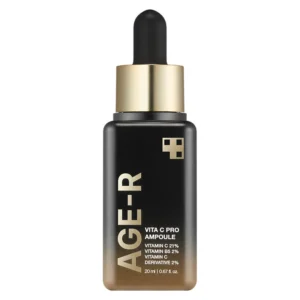
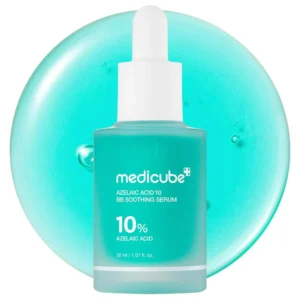
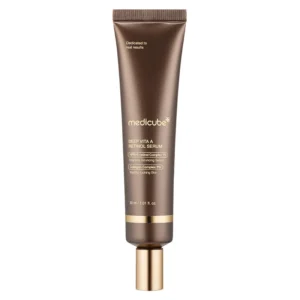
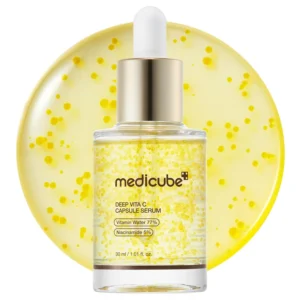
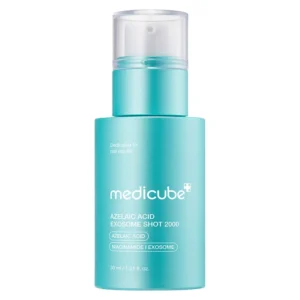
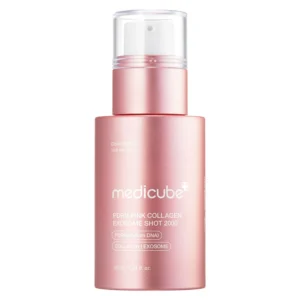
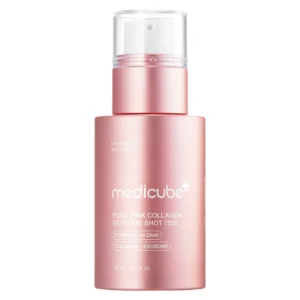
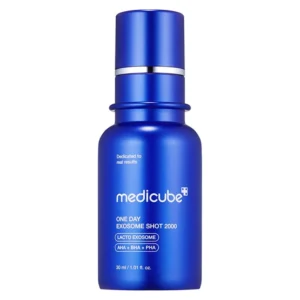
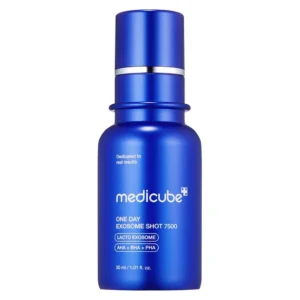
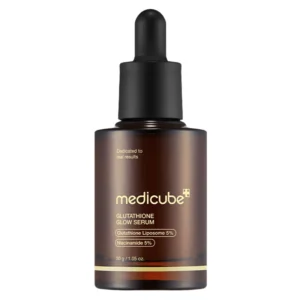
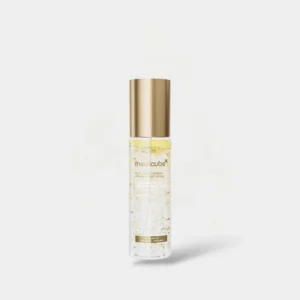
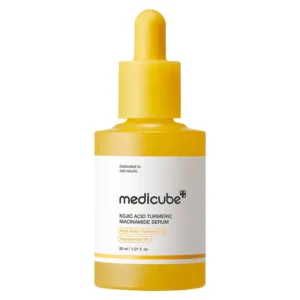
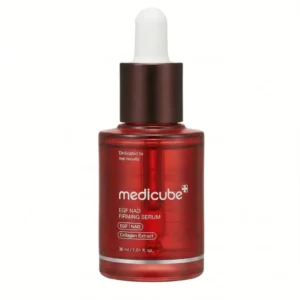
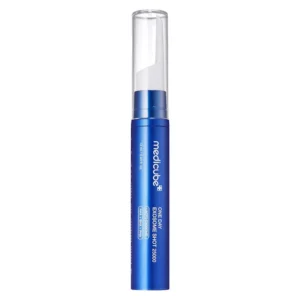
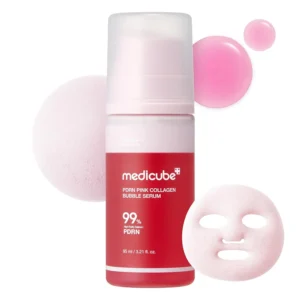
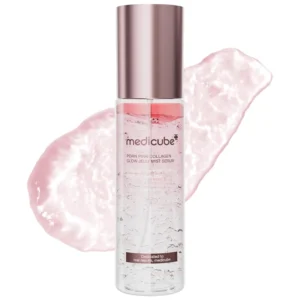
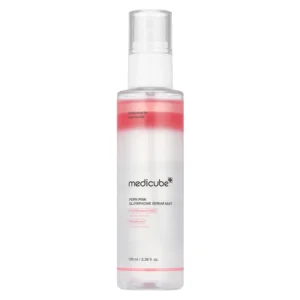
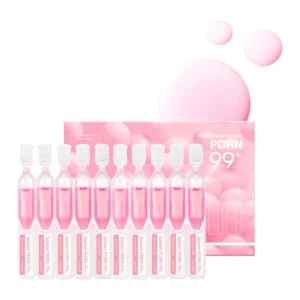
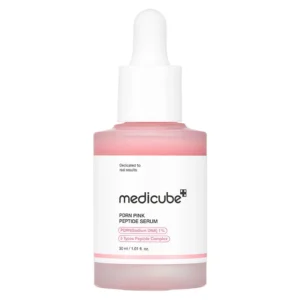
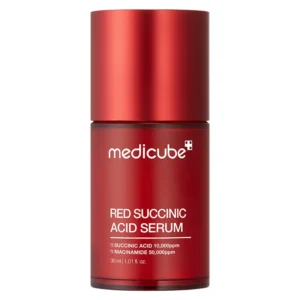
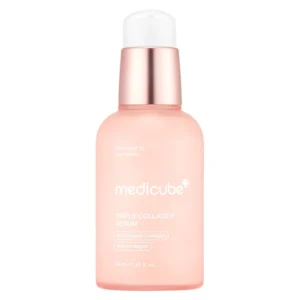
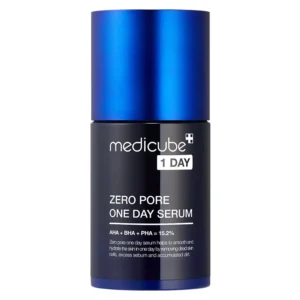
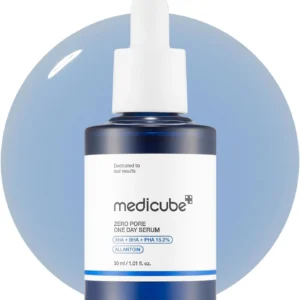
Medicube’s serum range is the largest and most varied part of the brand, built around specific actives rather than one general formula. From regenerative PDRN and collagen to brightening vitamin C and gentle exfoliating acids, there’s a serum for nearly every concern. Here’s the full range, what each one does, and how to work out which one belongs in your routine.
Medicube’s serums sit at the heart of the brand’s routine, usually applied straight after toning and before a moisturiser locks everything in. Unlike a toner or a pad, a serum carries the highest concentration of active ingredients in the routine, so this is where most of the real skincare work happens.
The range spans several formats too. Some are lightweight drop serums, others come as single use ampoules, twist and click dispensers, or even a bubble texture that melts on contact with skin. Whatever the format, each one is built around a specific concern, whether that’s firmness, brightness, hydration, or pore refinement, so it’s worth picking based on what your skin actually needs rather than the prettiest bottle.
Across the range, four main families of ingredients come up again and again.
Most formulas also lean on niacinamide and adenosine as supporting players, alongside soothing ingredients like centella asiatica or panthenol to keep the stronger actives comfortable on skin.
A few of the stronger serums, particularly the exfoliating and retinol formulas, are best kept to an evening routine rather than daily morning use. Check each product’s specific guidance before combining it with other actives.
Yes, Medicube serums are well regarded for their formulations and high concentration active ingredients. They consistently deliver visible results at a more accessible price point than many premium skincare brands.
It depends on your skin concern. The PDRN Pink Peptide Serum is best for hydration and repair, the Deep Vita C for brightening, and the Azelaic Acid Serum for acne and redness.
Medicube serums target specific skin concerns with high concentration actives including brightening, pore refinement, hydration, firming and acne control. Most users see visible improvement within two to four weeks of consistent use.