
What Is PDRN in Skincare? The Science, the Benefits, and How it works
PDRN short for polydeoxyribonucleotide is one of the most clinically grounded ingredients to enter mainstream skincare in the last five years. If you have seen it on a product label and wondered what it actually is, the straightforward answer is this: PDRN in skincare is a purified, fragmented form of DNA derived primarily from salmon sperm cells. It works by activating specific cellular receptors in the skin that signal repair, hydration, and regeneration. It has a decades-long clinical history in wound healing and regenerative medicine and Korean skincare brands, led by Medicube, were the first to bring it from the clinic into an accessible daily skincare routine.
This is not a trend ingredient with a compelling story and thin evidence. PDRN has peer-reviewed research behind it going back to the 1990s. What is new is its application in topical skincare and the results that consistent use is producing for the people using it.
Most trending skincare ingredients arrive with marketing first and research second. PDRN arrived with research first which is exactly why the skincare industry took so long to catch up with what Korean dermatology already knew.
What Is PDRN — The Science in Plain Language
PDRN stands for polydeoxyribonucleotide. It is a long-chain polymer made up of deoxyribonucleotide units the building blocks of DNA. In skincare, PDRN is extracted from salmon trout sperm cells, purified to pharmaceutical grade, and fragmented into chains of specific molecular weights. The salmon source is used because its DNA structure is highly compatible with human cellular receptors a compatibility that has been studied and verified across multiple clinical settings.
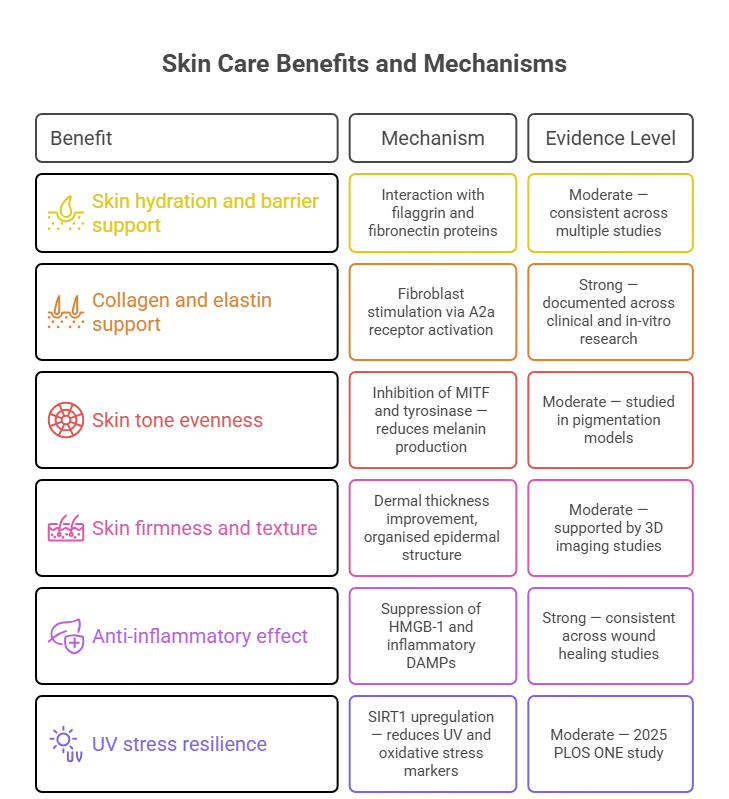
The key mechanism is receptor activation. PDRN binds to adenosine A2a receptors in the skin receptors that, when activated, trigger a cascade of regenerative processes: increased fibroblast activity, collagen and elastin production, improved microcirculation, and a reduction in inflammatory signalling. This is not a surface-level effect. PDRN works at a cellular level, prompting the skin’s own repair and renewal systems rather than applying an external cosmetic fix on top of them.
Clinical Origin: PDRN was approved by the Italian Medicines Agency (AIFA) in 1994 as a treatment for superficial wounds, skin ulcers, and dystrophic connective tissue disorders nearly 30 years before it entered mainstream skincare. The dermatological research base is not new. The mainstream skincare application is.
What Does PDRN Actually Do for Skin
A 2026 systematic review of randomised clinical trials published in Cureus via PubMed, covering PDRN and polynucleotide interventions across skin rejuvenation, scar prevention, and wound healing, found consistent improvements in wrinkle-related outcomes, skin texture, and patient satisfaction across studies. The most consistent evidence was for wound healing and skin regeneration applications precisely the mechanisms that make PDRN relevant in a daily skincare context.
2025 Research: A 2025 study published in PLOS ONE found that PDRN significantly upregulated SIRT1 expression a protein associated with cellular stress resistance and longevity and reduced UV-induced skin atrophy in animal models. The study noted that aging skin could be restored to control-level structure after PDRN treatment, describing it as a natural ingredient with strong anti-aging potential.
Here is what the research supports for topical PDRN use in skincare:
Why Korean Skincare Got to PDRN First
PDRN’s journey from clinical medicine to consumer skincare followed a path that is distinctly Korean. South Korea has one of the highest rates of aesthetic dermatology procedure uptake in the world meaning Korean consumers are more familiar with clinical ingredients like PDRN, hyaluronic acid fillers, and polynucleotides than consumers in most other markets. When Korean skincare brands began formulating PDRN into topical products, they were translating something their consumer base already trusted from clinic visits into an accessible daily format.
The technology transfer was not straightforward. Raw PDRN molecules are too large to penetrate the skin barrier through standard topical application. Korean formulation teams developed encapsulation and delivery systems specifically to solve this problem, fragmenting PDRN chains to molecular weights that allow meaningful dermal absorption and packaging them in formats stable enough for daily use. This formulation work is the reason PDRN in a Korean serum performs differently from PDRN simply listed on an ingredient label the delivery system is as important as the active itself.
PDRN in Medicube — How the Brand Uses This Ingredient
Medicube is one of the brands most closely associated with PDRN in accessible consumer skincare. The brand’s PDRN range is formulated around pharmaceutical-grade salmon PDRN combined with supporting actives , peptides, adenosine, and barrier-support ingredients that work alongside the PDRN mechanism rather than competing with it.
For Daily PDRN Serum Use
The Medicube PDRN Pink Peptide Serum delivers PDRN alongside a peptide complex in a lightweight serum format designed for consistent daily use. The encapsulated PDRN is formulated at a molecular weight optimised for topical absorption, and the supporting peptide complex adds a complementary signal for collagen and elastin support. It is the starting point for most people beginning a PDRN routine simple to layer into an existing routine after toner and before moisturiser.
For Intensive PDRN Treatment
The Medicube Pink PDRN Jelly Cream combines PDRN with a barrier-sealing moisturising base , a richer format that delivers PDRN alongside ceramide and panthenol support for skin that needs both regenerative signalling and intensive hydration simultaneously. Particularly well-suited for dry, mature, or barrier-compromised skin types where the moisture-retention and cellular-repair benefits of PDRN work together most visibly.
How to Add PDRN to Your Skincare Routine
PDRN is one of the most straightforward actives to introduce into an existing routine because it has no known interactions with other common skincare ingredients and does not require a skin adjustment period. It layers cleanly after toner and essence, before moisturiser, and is compatible with niacinamide, vitamin C, peptides, and importantly retinoids, where its anti-inflammatory properties can help offset the irritation that retinoid users sometimes experience.
- Morning: PDRN serum after toner, before moisturiser and SPF. Supports the skin’s daytime repair capacity and works alongside SPF rather than against it.
- Evening: PDRN serum after toner or essence. Can be layered under a richer moisturiser or PDRN cream for maximum overnight regenerative support.
- With a device: apply PDRN serum immediately before using an electroporation device. The device-enhanced absorption is most effective when the product is freshly applied to clean skin.
- Frequency: daily use is both safe and recommended for PDRN. Unlike exfoliating acids or high-percentage retinoids, PDRN does not require an introduction schedule it can be used every morning and evening from the first application.
PDRN Is Not the Future of Skincare — It Is Already Here
The ingredient that Korean dermatologists have been using in clinics for decades has arrived in accessible daily skincare and the research behind it is more substantial than almost any other ingredient that has entered the consumer beauty market in recent years. PDRN does not produce overnight transformation. It produces progressive, cellular-level improvement that compounds over consistent use exactly the kind of result that the Korean skincare philosophy has always been built around.
For anyone building a K-beauty routine focused on long-term skin health rather than short-term cosmetic fixes, PDRN is not an optional upgrade. It is the ingredient that closes the gap between what a daily skincare routine can do and what a clinical treatment achieves..